
window.FrenzyProductGridChangeCallBack is a global hook that lets theme developers modify each product card generated by Frenzy.
Common uses include:
- Displaying custom, sale, preorder, new, or sold-out badges
- Rendering color or material swatches
- Updating price presentation
- Adding low-stock or delivery messages
- Adding wishlist or compare buttons
- Adding analytics attributes
- Loading additional Shopify product information
1. Callback signature
Parameters
2. When the callback runs
The callback runs every time Frenzy formats a product card. Depending on the store configuration, that can include:- Collection grids
- Search-result grids
- Recommendation carousels
- Cart-popup recommendations
- Infinite-scroll results
- Predictive-search suggestions
- Safe to run repeatedly
- Scoped to the supplied
cardRoot - Fast
- Protected against missing data and missing elements
- Careful about context-specific behavior
3. Understanding the product payload
The keys in the ‘data’ object is controlled from the Dashboard. (Search & Collections -> Filter Settings -> Extra Properties -> Response Fields. Below is an example image. This is done to limit the data in the API response and maintain the platform speed.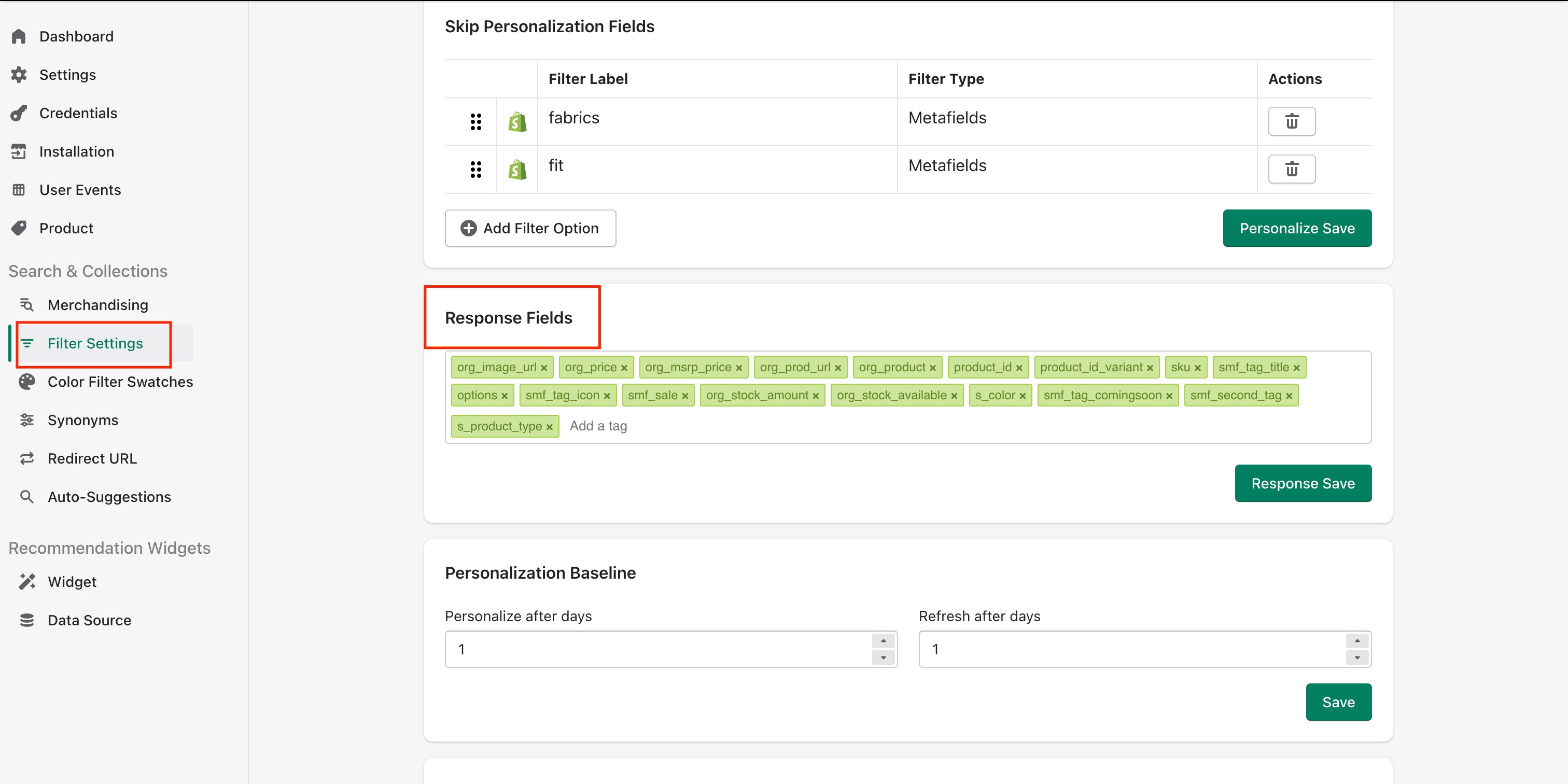
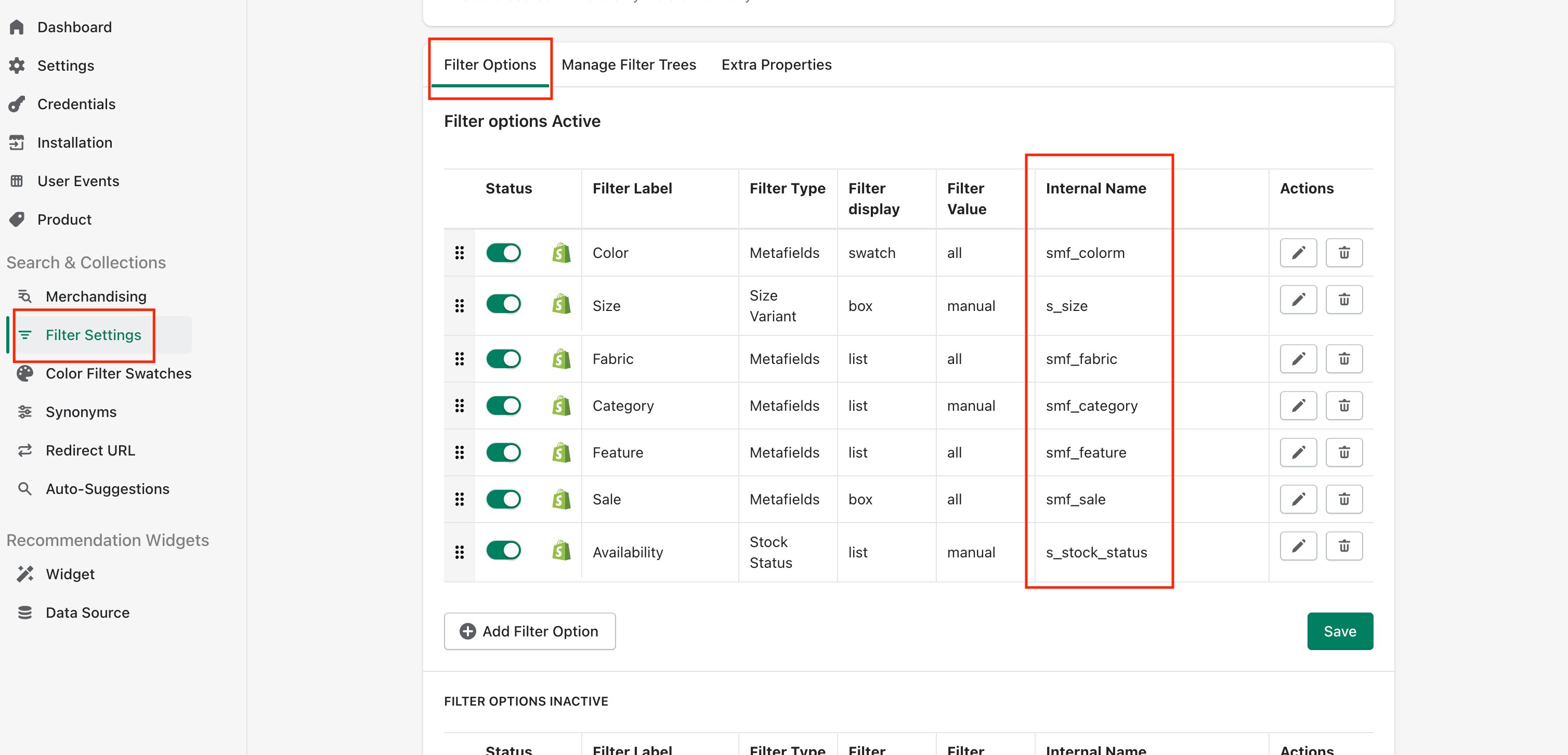
*Do not assume every field will exist.
During development, inspect the real payload:
4. Recommended callback structure
Only one global callback can exist. Assigning the function again replaces the previous implementation. Use one coordinator that calls separate extension functions:try/catch is important. An uncaught exception can interrupt the product-grid rendering loop and affect subsequent cards.
If the theme already defines this callback, either add new helpers to the existing implementation or wrap it:
5. Use case: product badges
The following example supports:- Automatic sold-out badges
- Percentage-off sale badges
- Preorder tags
- Custom
_badge_product tags
textContent when displaying product data. Avoid inserting untrusted field values directly through innerHTML.
6. Use case: color or material swatches
This example readsColor or Metal from all_options_details.
Render swatches synchronously
Handle clicks through event delegation
Install this listener once, outside the callback:- Product links with
?variant=... - Quick-add variant IDs
- Price and compare-at price
- Secondary product image
- Size availability
- The selected swatch state
7. Use case: custom merchandising rules
The callback can apply rules using product tags, inventory, template suffixes, collections, metafields, or request context.8. Use case: context-specific behavior
Because the callback may run for collections, recommendations, predictive search, and cart popups, not every extension should run everywhere. Useorg_request_type where available:
product.org_request_type in the development theme before building an allowlist.
9. Use case: asynchronous product enrichment
Sometimes the Frenzy feed does not include everything required by the theme. Additional information may need to come from:- Shopify’s product JSON endpoint
- A custom Shopify alternate view
- A metafield endpoint
- A third-party loyalty or review service
10. Other useful extensions
Price presentation
Developers can add:- “From” labels for products with a price range
- Percentage-saved messages
- Member pricing
- Clearance styling
- Regional price messages
Wishlist or compare integrations
The callback can synchronously insert the required placeholder, product ID, variant ID, and classes. Initialize the third-party library only after the card is present in the live document.Analytics
The callback is useful for adding attributes:IntersectionObserver on the live cards.
Accessibility
Custom extensions should include:- Buttons for interactive swatches
- Descriptive
aria-labelvalues aria-pressedfor selected swatches- Proper disabled states
- Visible keyboard focus
- Text equivalents for color-only indicators
12. Production checklist
Before publishing an extension:- Use a single global callback.
- Define it before Frenzy performs its first grid render.
- Wrap the callback in
try/catch. - Guard every optional selector and data field.
- Make every modification idempotent.
- Scope synchronous queries to
cardRoot. - Do not attach event listeners to the detached card.
- Use event delegation for interactive features.
- Do not rely on an asynchronous callback return value.
- Re-query the live document after asynchronous work.
- Cache per-product network requests.
- Use
textContentfor product-derived text. - Sanitize any non-theme HTML before inserting it.
- Test collection, search, recommendations, predictive search, cart popup, filtering, sorting, and infinite scroll.
- Test products with missing images, no variants, sold-out variants, price ranges, and incomplete metafields.